

Introduction
Are you planning to study abroad? Great!
Your decision to pursue a quality education abroad opens up new opportunities. The benefits of studying abroad begin from the moment you adopt the right mindset.
You get to explore culture, food, and language, and build a network. Starting a new business in Nepal with international practices becomes easy. You can also bridge cultural gaps while understanding the global market.

Some Facts
60% of employers worldwide value international study experience when recruiting candidates. (QS Global Employer Survey)
People with international degrees tend to earn more than those educated locally. (Nepal Economic Forum)
On average, you could earn 35–70% more than your locally educated peers. (Nepal Economic Forum).
Now you have the basic information. Let’s delve deeper into the benefits.
15 Benefits of Studying Abroad for Your Career
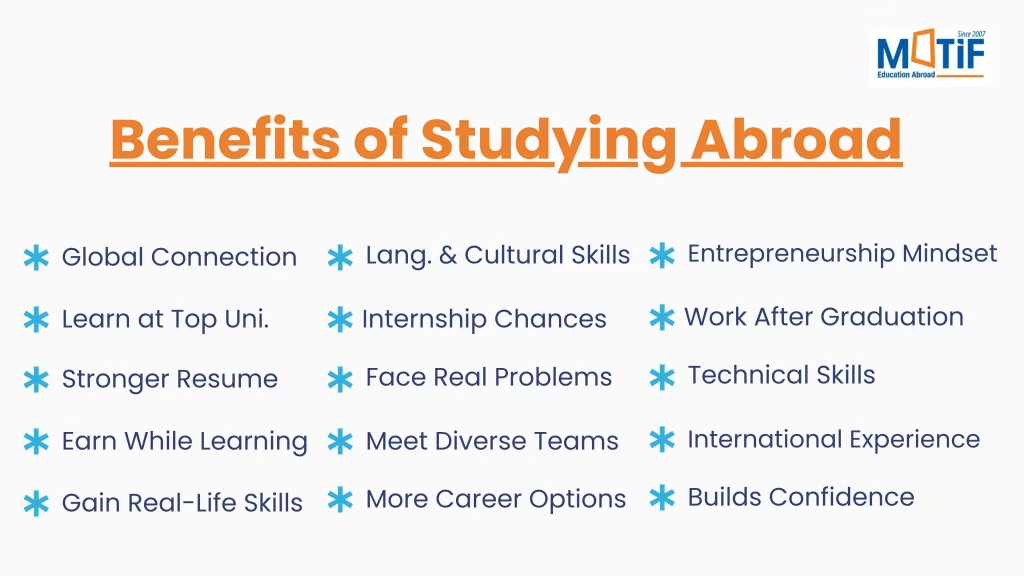
Studying overseas doesn’t just give you a degree. It builds the skills and experience that help your career grow faster. Here are 15 benefits of studying abroad.
- Global Connection
- Learn at Top University
- Stronger Resume
- Earn While Learning
- Gain Real-Life Skills
- Learn Language and Skills
- Chances of Internship
- Face Real Life Problems
- Work in Diverse Teams
- More Career Options
- Build an Entrepreneur Mindset
- Work after Graduation
- Understand Modern Tech
- International Work Experience
- Be confident and Independent
1. Build Global Connections
You meet people from all over the world, classmates, teachers, and professionals. These connections can help you land jobs or launch businesses later.
Top universities have powerful alumni networks. These connections help graduates find jobs and guidance long after graduation. This can help you even when you’re returning to Nepal.
Nepal Alumni Network states that 63% of international graduates found jobs through contacts they made abroad.
2. Learn at Top Universities
Many international schools have modern facilities. The facility includes teaching methods, real-world projects, and strong links with big companies. Getting a degree from a reputable university can help you stand out.
3. Make Your Resume Stronger
A foreign degree helps your resume get noticed.
A survey in Kathmandu found that 82% of employers value international education, especially for leadership roles. It shows that you’re independent, adaptable, and able to work across cultures.
4. Earn More, Grow Faster
Data shows that Nepalese professionals with foreign degrees earn 78% more than those who studied only in Nepal.
Many achieve senior positions 2–3 years earlier than their locally educated peers.
5. Gain Real-Life Skills
Once you leave home, you will need to manage everything on your own. This teaches you independence, communication, teamwork, problem-solving, and resilience.
6. Improve Language & Cultural Skills
Being in a new language environment improves fluency fast. A 2023 Nepal Employment Tracking Survey showed that 87% of returnees reached professional fluency, compared to only 34% who studied English in Nepal.
You’ll also learn how people communicate in different countries. This gives you a major advantage in global workplaces.
7. Better Internship Chances
Top universities have strong ties with big companies. This means better internship chances that build your resume and job options.
67% of international students get job offers after internships.
8. Solve Real Problems
Unlike many programs in Nepal, international education focuses on practical application.
You’ll work on real-life challenges using case studies, team projects, & industry tasks. This prepares you for workplace problems and builds critical thinking.
9. Work Well in Diverse Teams
When working abroad, you will meet people from different countries. A diverse team helps you develop collaboration and interpersonal skills.
You can be more valuable to Nepali companies that partner with international teams.
A Nepal Communication Association study found that returnees were 3.5 times more likely to succeed in jobs involving international teamwork.
10. Have More Career Options
When you are in Nepal, you are limited to a few courses. An international degree gives you the freedom to change jobs and industries.
11. Think Like an Entrepreneur
While entrepreneurship is still emerging in Nepal, studying abroad exposes you to vibrant startup cultures.
You’ll be surrounded by innovation and business ideas, which later help you to start your own.
Nepal Innovation Hub reports that 47% of tech startups in Kathmandu were started by returnees.
12. Work After Graduation
Many countries let you work for several years after finishing your studies. This gives you real-world experience that makes your resume stronger when applying for jobs back home or abroad.
13. Learn Modern Tech Skills
You get to know and explore new tools that are ready for the market. The latest digital tools and systems used around the world can help you to be better at work.
(Nepal ICT Workforce Study) 91% of tech companies prefer candidates with international experience. This is because they already know how to use global-standard software.
14. Get International Work Experience
Working abroad after studying gives you a competitive edge. Employers in Nepal value this kind of experience and often offer higher pay to those who have it.
15. Become Confident and Independent
Living alone in a new country builds confidence and life skills. According to FNCCI, many companies hire returnees because they are:
- More confident
- Better decision-makers
- Ready to take initiative
This independence often leads to faster career growth and leadership roles.
How to Choose the Right Country for Your Career Goals

After hearing about the benefits. You might be excited. Now, the country plays a big role here.
It’s not just about going abroad. It’s about you choosing the wrong country. If not, you can face issues with jobs, safety, regulations, documents, and more.
Here are some countries and their offerings:
Canada

Canada offers a Post-Graduation Work Permit (PGWP) of up to 3 years after graduation. You can get an affordable education with a high standard of living compared to other countries.
There is high demand in fields like technology, healthcare, engineering, business, and natural resources.
Canada has a multicultural society that makes it easier for students to adapt and feel at home. It is safe, has quality healthcare, and a strong support system for newcomers.
United Kingdom (UK)

In the UK, you can work for 2 years after graduation with the Graduate Route visa. The UK has the oldest and most respected university in the world. They are popular for courses in business, finance, law, creative arts, engineering, and media.
Here you can work part-time during studies and internships through the university career centers. You get to explore cultural diversity and historical richness that enhances both academic and personal growth.
Australia

Australia offers a Temporary Graduate visa (subclass 485). It allows students to work for 2–4 years after graduation. It depends on the level of study and location.
Australia is a favored destination among Nepalese students seeking higher education.
Australian university is known for their excellence in healthcare, tourism, hospitality, engineering, IT, and environmental science.
Universities are spread across vibrant cities like Sydney, Melbourne, Brisbane, and Perth.
Australia strongly focuses on student safety, multiculturalism, and a balanced lifestyle.
Here you will get plenty of part-time work opportunities and a strong support network.
New Zealand

New Zealand is known for its peaceful environment and welcoming culture. It is excellent for careers in agriculture, engineering, IT, and environmental sciences.
It offers a post-study work visa of up to 3 years, depending on your qualification. Permanent residency is also available for skilled graduates. It offers a great quality of life, beautiful natural landscapes, and a friendly atmosphere.
United States (USA)

The USA is one of the most popular destinations for international students. It is best for careers in technology, business, research, engineering, and medicine. It is home to many of the world’s top-ranking universities and research institutions.
If you are interested, the US provides Optional Practical Training (OPT) – up to 12 months and STEM – up to 24 months of work after graduation. You get strong alumni networks and internship opportunities with exposure to a highly competitive and diverse work environment.
Question to ask yourself
Before choosing the university. You must be clear on what, how, and where I am going to study.
For that, here are a few of the questions to ask yourself.
- Which country is best for my field of study?
- Can I work after graduation? For how long?
- How much will it cost to live and study there?
- Why do I want to study abroad?
- Can I work while studying?
- What are the post-study work opportunities?
- Is the degree recognized globally and in Nepal?
- Can I afford the total cost?
- What is the visa process like?
- Will I be comfortable with the culture and lifestyle?
- Is the country safe for international students?
- What support does the university provide to international students?
- Will this experience help me grow personally and professionally?
Best Courses for a Global Career
Studying abroad gives you skills that are respected and accepted globally. These courses help you find better jobs and build a network.
Some of the courses you can choose from are:
Business and Management
Business and management offer one of the most in-demand careers. You can get career opportunities in almost every domain.
If you study international business or digital marketing, you can work in different industries and countries. Big companies look for people who understand global markets and digital trends.
Healthcare
Healthcare offers jobs in nursing, public health, medical tech, and many more. As people are getting older, they need better nutrition, care, and support, which increases the demand for it.
Many countries open vacancies for trained nurses. If you have a strong nursing background. You can work in countries like Canada, the UK, Australia, and the USA.
Data Science and Artificial Intelligence (AI)
AI is currently one of the hottest topics. Companies want experts who can use data and build smart systems. The use of AI is changing sectors like finance, education, and health.
Computer Science and Cyber Security
With more cyber attacks occurring, there’s a big need for security experts. These skills are useful in banks, hospitals, tech firms, and other places.
Note: Many of these jobs allow work from home.
Hospitality Management
Travel and tourism are growing rapidly.
With hospitality training, you can work in hotels, resorts, airlines, or an event management company. It lets you meet people from different cultures and gain real-world experience.
Accounting and Finance
Every business needs to maintain its cash flow, balance sheet, etc. This is where financial experts stand out.
Learning global accounting and finance rules makes it easier to work in any country. Certifications like ACCA, CFA, or CPA increase your value and job options globally.
Law (LLB / LLM)
As global business expands, the demand for legal professionals continues to rise.
In the global market, there are various career opportunities. Lawyers are hired by big companies, legal offices, and organizations like the UN.
For that, you need to have an understanding of international law, business law, human rights law, etc.
What's the ROI of Studying Abroad?
Studying abroad isn’t just limited to education. It’s a gateway to open new opportunities. Due to the increase in tuition fees, living costs, and visa expenses. The question may arise: Is it worth the investment?
Let’s understand what is ROI and what are the things you will get back.
What Is ROI?
ROI stands for Return on Investment. In simple terms, it’s a comparison of how much you spend vs. what you gain from that investment. When it comes to studying abroad, ROI can be measured by:
- Higher salaries
- Better career opportunities
- Permanent residency or immigration benefits
- Personal development and global exposure
- Investment
It includes the money you will spend abroad. The cost includes:
- Tuition Fees – Can range from $10,000 to $50,000+ per year, depending on the country and program.
- Living Expenses – Rent, food, transport, insurance, etc.
- Visa and Travel Costs – Flight tickets, visa application, health insurance, etc.
- Opportunity Cost – Income lost if you take a break from work or study longer.
Other Benefits
These are non-financial benefits. These benefits arrive when you go abroad.
Some of them are:
- More career choices around the world
- A strong global network of contacts
- Better skills and work experience
- Improved quality of life
What Will You Gain
1. Higher Earning Potential
Graduates from these countries often earn more than those who study only in Nepal. In Canada, international graduates earn about CAD 50,000–$70,000 a year. In the USA, STEM graduates can earn between $70,000–$120,000 a year.
2. Global Job Opportunities
Studying abroad helps you get jobs with big companies around the world. Employers value:
- Experience living and studying abroad
- Good communication skills
- The ability to adapt and work independently
3. PR & Immigration Benefits
Many countries let you work after graduation and even apply for permanent residency. Canada gives up to 3 years of a work permit and offers PR through Express Entry. Australia offers a Temporary Graduate Visa and a points-based system for PR.
4. Personal & Professional Growth
Living and studying in another country builds important life skills. Such as:
- Better confidence
- Stronger English (or other language) skills
- Understanding different cultures
- Making friends and connections worldwide
These benefits help you grow not just as a student, but also as a professional and a person.
How can you get the best ROI?
1) Apply for scholarships – Over $7 billion in international scholarships are available every year
2) Choose affordable countries with good exchange rates and lower living costs
3) Work part-time if allowed to reduce expenses
4) Study in countries offering free or low-cost tuition, such as Germany, Norway, and Finland
5) Pick programs in fields with strong job demand and high salary potential
Conclusion
Studying abroad is more than just going to college in another country. It’s a life-changing experience that helps you grow both personally and professionally.
You’ll:
- Make friends from around the world
- Learn skills that help you get better jobs
- Gain confidence and independence
- Get hands-on experience with modern technology
- Build a career that can take you anywhere
Whether you want to work for big companies, start your own business, or come back home with new ideas, studying abroad gives you the tools to succeed.
Choosing the right country and course matters. With good planning and support, studying abroad can become one of the best decisions you ever make. It shapes your future and opens doors to a brighter career.